
Cyclospora is a parasite composed of one cell, too small to be seen without a microscope. The organism was previously thought to be a blue-green alga or a large form of Cryptosporidium. Cyclospora cayetanensis was long regarded as the only species of this organism found in humans; however, genomic analyses reported by CDC scientists in 2023 indicate that what had been identified as C. cayetanensis actually comprises at least three genetically distinct, reproductively isolated species that infect people—C. cayetanensis, C. ashfordi, and C. henanensis.[1]
Cyclosporiasis is an intestinal illness caused by the parasite Cyclospora cayetanensis, which is transmissible by ingestion of fecally contaminated food or water.[2] Cyclosporiasis is most common in tropical and subtropical regions of the world. In the United States, foodborne outbreaks of cyclosporiasis have been linked to various types of imported fresh produce (e.g., basil, raspberries, and snow peas). For years, the lack of validated molecular typing tools hampered efforts to link cases and trace outbreaks. Since about 2018, however, CDC has developed and begun using a C. cayetanensisgenotyping system—based on targeted deep sequencing of mitochondrial and nuclear DNA markers—to complement outbreak investigations and connect geographically scattered cases, and work continues to refine it into a nationwide typing network.[3]
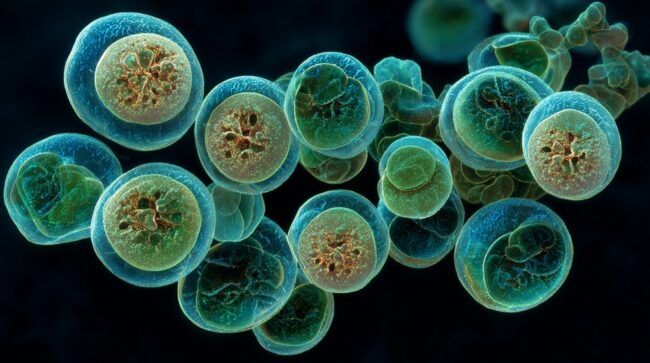
Outbreaks of cyclosporiasis in humans have been reported mostly from North America, from the infection sources of contaminated fresh food products, such as soft fruits (raspberries), leafy vegetables (coriander, basil, and mixed salad), and herbs. Soil is another possible infection source, particularly in areas with poor environmental sanitation.[4]
The Centers for Disease Control and Prevention (CDC) has been conducting national surveillance for cyclosporiasis since it became a nationally notifiable disease in January 1999. As of 2026, cyclosporiasis is reportable in 47 states, the District of Columbia, and New York City (NYC).[5] Health departments voluntarily notify CDC of cases of cyclosporiasis through the National Notifiable Diseases Surveillance System and submit additional case information using the CDC cyclosporiasis case report form or the Cyclosporiasis National Hypothesis Generating Questionnaire (CNHGQ).[6]
While cyclosporiasis cases are reported year-round in the United States, cyclosporiasis acquired in the United States (i.e., “domestically acquired,” or cases of cyclosporiasis that are not associated with travel to a country that is considered endemic for Cyclospora) is most common during the spring and summer months. The exact timing and duration of U.S. cyclosporiasis seasons can vary, but reports tend to increase starting in May. In 2020, multiple outbreaks of cyclosporiasis were identified and found to be linked to different produce items. As of September 23, 2020, the CDC documented 1,241 laboratory-confirmed cases of cyclosporiasis in people who had no history of international travel during the 14-day period before illness onset.[7] Reported cases have climbed markedly over the past decade—from 537 in 2016 to 3,519 in 2018 and 4,703 in 2019—an increase that reflects both a genuine rise in illness and the growing use of rapid multiplex molecular stool panels (such as the FDA-cleared BioFire FilmArray gastrointestinal panel) that now detect Cyclospora as a matter of routine.[8] The seasonal pattern has continued in the years since; early in the 2026 season, for example, CDC reported 145 domestically acquired cases across 17 states between May 1 and June 16.[9]
What are the typical symptoms of Cyclospora infection?
Cyclospora infects the small intestine (bowel) and usually causes watery diarrhea, bloating, increased gas, stomach cramps, and loss of appetite, nausea, low-grade fever, and fatigue. In some cases, vomiting, explosive diarrhea, muscle aches, and substantial weight loss can occur. Some people who are infected with Cyclospora do not have any symptoms. The time between becoming infected and becoming ill is usually about one week. If not treated, the illness may last from a few days up to six weeks. Symptoms also may recur one or more times (relapse). In addition, people who have previously been infected with Cyclospora can become infected again.[10]
Where does Cyclospora come from?
The modes of transmission of C. cayetanensis are still not completely documented, although fecal–oral transmission is the major route. Direct person-to-person transmission is unlikely. Indirect transmission can occur if an infected person contaminates the environment, the oocysts sporulate under the right conditions, and then contaminated food and water are ingested. The role of soil in transmission has also been proposed. The relative importance of these various modes of transmission and sources of infection is not known.[11]
The dissemination of infective Cyclospora oocysts via water, soil, and unprocessed foods (e.g., fruits and vegetables, including ready-to-eat salads) is enabled by their small size (8–10 μm), low specific gravity, and high infectivity. Such oocysts can survive for weeks to months in water and food, depending on the environmental temperature, and are resistant to the routine sanitization or chemical disinfection procedures used in irrigation systems, recreational waters, or drinking water treatment plants.[12]
How is Cyclospora diagnosed?
Cyclosporiasis is usually diagnosed symptomatically in clinical settings, including the presence of watery diarrhea, abdominal cramping, and bloating. In untreated, immunocompetent people, the diarrhea can last from days to weeks to a month or more, and can wax and wane, with variable oocyst shedding. Oocysts can continue to be shed (intermittently or continuously) by non-symptomatic people, and symptoms can also persist in the absence of oocysts in feces. In a clinical context, conventional diagnosis usually involves microscopic examination of intestinal tissue biopsy sections, stool samples for the presence of developmental stages of Cyclospora, or advanced molecular testing for DNA. Improved specificity and sensitivity have been possible largely through the use of PCR, which enables the specific amplification of genetic loci from tiny amounts of genomic DNA of Cyclospora. Because of the intermittent nature of oocyst shedding and the low numbers of this stage in feces, it is recommended that multiple stool samples be collected at 2–3-day intervals over a period of more than a week, to increase the likelihood of identifying the disease microscopically.[13]
What are the serious and long-term risks of Cyclospora infection?
Cyclospora has been associated with a variety of chronic complications such as malabsorption, reactive arthritis, and cholecystitis (inflammation of the gallbladder). Since Cyclospora infections tend to respond to the appropriate treatment, complications are more likely to occur in individuals who are not treated or not treated promptly. Extraintestinal infection also appears to occur more commonly in individuals with a compromised immune system.[14]
Although human cyclosporiasis is usually not fatal in developed countries such as the United States, protracted diarrhea often leads to dehydration, particularly in infants who are at greatest risk of severe dehydration and death, especially if cyclosporiasis is complicated by infections with other pathogens (viral, bacterial, or parasitic—e.g., Cryptosporidium and Giardia), malnutrition, or malabsorption, particularly in underprivileged communities.[15]
According to the CDC[16], the recommended treatment is a combination of two antibiotics, trimethoprim-sulfamethoxazole, also known as Bactrim, Septra, or Cotrim. It is advisable for people who have diarrhea to also rest and drink plenty of fluids.
How can Cyclospora infection be prevented?
There is no vaccine for cyclosporiasis, and no medication is available to prevent infection before exposure. Because the parasite is spread through food or water that has been contaminated with feces, the best available protection, according to the CDC, is to avoid consuming food or water that may be contaminated.[17]
Standard food-safety and hygiene practices reduce the likelihood of infection. Public health authorities recommend washing hands with soap and water before and after handling or preparing raw produce; washing all fruits and vegetables thoroughly under running water before eating, cutting, or cooking (items labeled “prewashed” need not be washed again); scrubbing firm produce such as melons and cucumbers with a clean produce brush; cutting away any damaged or bruised areas; and refrigerating cut, peeled, or cooked produce within two hours.[18]
These measures decrease but do not eliminate the risk of transmission. Rinsing or washing produce is not likely to remove Cyclospora oocysts, which adhere tightly to surfaces, and the parasite is resistant to routine chemical disinfection methods such as those using chlorine.[19] The theoretical infective dose may be as low as a single sporulated oocyst, and there is no way to render contaminated produce reliably safe short of avoiding it altogether.[20]
Travelers to tropical or subtropical regions where cyclosporiasis is endemic face a heightened risk and should follow the food and water precautions set out in the CDC’s Yellow Book, consuming only water known to be safe—such as sealed bottled water, boiled tap water, or carbonated beverages. In such settings, routine chemical disinfection or sanitization of food or water is unlikely to inactivate the parasite.[21]
For retailers, restaurants, and other food-service operators, the FDA recommends washing and sanitizing utensils, cutting boards, surfaces, display cases, and refrigerators before and after handling potentially contaminated products, sourcing produce from reputable suppliers, and maintaining purchase records so that traceback investigations can identify a contaminated source when an outbreak occurs.[22]
[1] CDC. (2024, May 17). Three of a Kind: CDC Researchers Find Cyclospora Is Not Just a Single Species. Advanced Molecular Detection, Centers for Disease Control and Prevention. https://www.cdc.gov/advanced-molecular-detection/php/success-stories/cyclospora.html
[2] Casillas, S. M., Hall, R. L., & Herwaldt, B. L. (2019). Cyclosporiasis Surveillance – United States, 2011-2015. Morbidity and mortality weekly report. Surveillance summaries (Washington, D.C.: 2002), 68(3), 1–16. https://doi.org/10.15585/mmwr.ss6803a1
[3] Nascimento, F. S., et al. (2019). Mitochondrial Junction Region as Genotyping Marker for Cyclospora cayetanensis. Emerging Infectious Diseases, 25(7). https://doi.org/10.3201/eid2507.181447
[4] Giangaspero, A., & Gasser, R. B. (2019). Human cyclosporiasis. The Lancet Infectious Diseases, 19(7), e226–e236. https://doi.org/10.1016/S1473-3099(18)30789-8
[5] CDC. (2026). Surveillance of Cyclosporiasis. Centers for Disease Control and Prevention. Retrieved July 2026, from https://www.cdc.gov/cyclosporiasis/php/surveillance/index.html
[6] Casillas, Ibid, Note 2 at Page 1.
[7] CDC. (2020, September 24). Cyclosporiasis Outbreak Investigations – United States, 2020. Centers for Disease Control and Prevention. https://www.cdc.gov/parasites/cyclosporiasis/outbreaks/2020/seasonal/index.html
[8] CDC. (2023). Notes from the Field: Doubling of Cyclosporiasis Cases Partially Attributable to a Salad Kit — Florida, 2021–2022. MMWR Morbidity and Mortality Weekly Report, 72(27), 748–749.
[9] CDC, Ibid, Note 5.
[10] Cyclosporiasis – Disease. (2018, May 11). https://www.cdc.gov/parasites/cyclosporiasis/disease.html
[11] Almeria S, Cinar HN, Dubey JP. Cyclospora cayetanensis and Cyclosporiasis: An Update. Microorganisms. 2019; 7(9):317.
[12] Giangaspero, Ibid, Note 4 at Page 1.
[13] Giangaspero, Ibid, Note 4 at Page 3-4.
[14] CDC. (2020, October 21). CDC – Cyclosporiasis – Resources for Health Professionals. Centers for Disease Control and Prevention. https://www.cdc.gov/parasites/cyclosporiasis/health_professionals/index.html
[15] Giangaspero, Ibid, Note 4 at Page 2.
[16] CDC. (2020, September 17). CDC – Cycloporiasis – General Information – Cyclosporiasis FAQs. https://www.cdc.gov/parasites/cyclosporiasis/gen_info/faqs.html
[17] CDC. (2024, August 8). Preventing Cyclosporiasis. Centers for Disease Control and Prevention. https://www.cdc.gov/cyclosporiasis/prevention/index.html
[18] New York State Department of Health. (2025). Cyclospora Infection (Cyclosporiasis) Fact Sheet. https://www.health.ny.gov/diseases/communicable/cyclosporiasis/fact_sheet.htm
[19] U.S. Food and Drug Administration. Cyclospora. https://www.fda.gov/food/foodborne-pathogens/cyclospora
[20] Goodrich Schneider, R., Schneider, K. R., et al. Preventing Foodborne Illness: Cyclosporiasis (FSHN0519/FS130). University of Florida IFAS Extension. https://ask.ifas.ufl.edu/publication/FS130
[21] CDC, Ibid, Note 17.
[22] U.S. Food and Drug Administration, Ibid, Note 19.