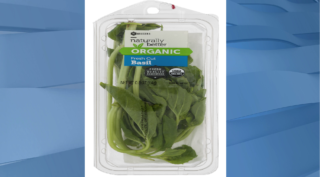
Basil Suspected in Cyclospora Outbreak

Friday June 03, 2005 8:53pm

TALLAHASSEE, Fla. (AP) - Contaminated fresh basil is suspected as the most likely cause of an outbreak of the parasitic illness cyclospora that has sickened 300 Floridians, state health officials said Friday. Officials don't know where the basil came from, or where it is being sold, said state Health Secretary John O. Agwunobi.

A spokesman for the Health Department said the federal Food and Drug Administration has agreed to try to trace the product and find out where it came from.

The disease isn't fatal, but can cause severe diarrhea and other painful symptoms.

Cases have been reported in 32 Florida counties in all regions of the state going back to April.

Health officials say people should wash fresh produce to prevent food-borne illnesses, but say that washing may not prevent cyclospora infection.

Cyclospora are microscopic, one-celled organisms that can contaminate fresh produce and burrow in the small intestine.

The illness can be treated with antibiotics or could pass naturally within a period of a few days up to a month.

On the Net:

Florida Department of Health: http://www.doh.state.fl.us/

Federal CDC (website - news) cyclospora page: http://www.cdc.gov/ncidod/dpd/parasites/cyclospora/default.htm

FONTAINE SANT... PESTO PRODUCTS MAY CONTAIN DANGEROUS MICROORGANISM

OTTAWA, August 3, 2005 - The Canadian Food Inspection Agency (CFIA) and Aliments Fontaine SantÈ Inc. are advising public not to consume the Fontaine SantÈ pesto products described below as they may contain the microorganism Cyclospora cayetanensis which presents a health risk.

The following Fontaine SantÈ products are affected by this alert:

Fontaine SantÈ, Pesto, Fresh Basil, sold in a 180 g package bearing UPC 7 70333 08100 6 and the Best Before dates from 30 AU 05 (August 30, 2005) up to and including 27 SE 05 (September 27, 2005);
Fontaine SantÈ, Pesto Cilantro, sold in a 180 g package bearing UPC 7 70333 08110 5 and the Best Before dates from 11 SE 05 (September 11, 2005) up to and including 25 SE 05 (September 25, 2005);
Fontaine SantÈ, Pesto Fusilli Salad, sold in a 350 g package bearing UPC 7 70333 00135 6 and the Best Before dates from 3 AU 05 (August 3, 2005) up to and including 17 AU 05 (August 17, 2005);
Fontaine SantÈ, Feta Penne Salad, sold in a 350 g package bearing UPC 7 70333 00125 7 and the Best Before dates from 4 AU 05 (August 4, 2005) up to and including 19 AU 05 (August 19, 2005);
There have been no reported illnesses associated with the consumption of these products.

Aliments Fontaine SantÈ Inc., St-Laurent, Quebec, is voluntarily recalling the affected products from the marketplace. The affected products were distributed in Quebec and Ontario.

For general information, food contaminated with Cyclospora cayetanensis may not look or smell spoiled. Cyclospora cayetanensis is a parasite that causes gastrointestinal infection. Usually the symptoms of infection begin about 1 week after exposure and may include watery diarrhea, loss of appetite, weight loss, stomach cramps, nausea, vomiting, prolonged fatigue, muscle aches, and low-grade fever. If untreated, the illness can last for weeks to months and symptoms can come and go.

Pesto products pulled from about 1,000 stores

Last updated Aug 5 2005 04:00 PM EDT
CBC News

Quebec's Fontaine SantÈ food producer is pulling a number of pesto and pasta products off shelves in about 1,000 stores across Quebec and Ontario.

Fontaine SantÈ product alert
Fontaine SantÈ, Pesto, Fresh Basil, sold in a 180 g package bearing UPC 7 70333 08100 6 and the best-before dates from 30 AU 05 (August 30, 2005) up to and including 27 SE 05 (September 27, 2005)
Fontaine SantÈ, Pesto Cilantro, sold in a 180 g package bearing UPC 7 70333 08110 5 and the best-before dates from 11 SE 05 (September 11, 2005) up to and including 25 SE 05 (September 25, 2005)
Fontaine SantÈ, Pesto Fusilli Salad, sold in a 350 g package bearing UPC 7 70333 00135 6 and the best-before dates from 3 AU 05 (August 3, 2005) up to and including 17 AU 05 (August 17, 2005)
Fontaine SantÈ, Feta Penne Salad, sold in a 350 g package bearing UPC 7 70333 00125 7 and the best-before dates from 4 AU 05 (August 4, 2005) up to and including 19 AU 05 (August 19, 2005)

Source: Canadian Food Inspection Agency
The company was getting its basil from a grower in Mexico that supplied a restaurant in Mont-Saint-Hillaire, where about 200 people got sick after eating a meal that contained basil.

The basil was contaminated with Cyclospora cayetanensis, a parasite that causes gastrointestinal infections.

Raymond Salloum, of Fontaine SantÈ , says nobody has fallen ill from eating his company's food. But, he says, the company recalled its pesto-based products after an investigation by the Canadian Food Inspection Agency .

"So for us [it's better] not to take any risks. We never had any complaints from our consumers, and we eat the food here every day. We have a hundred employees here in the production site, and they eat the food every day here. We never had any complaints, anybody said anything, anybody felt sick, or whatever. So, just as a precaution, we said 'okay, we'll do this,'" Salloum says.

CFIA warning consumers not to eat certain Fontaine Sante pesto products

Canadian Press
Thursday, August 04, 2005

OTTAWA (CP) - The Canadian Food Inspection Agency and Aliments Fontaine Sante Inc. are advising consumers not to eat the Fontaine Sante pesto products described below as they may contain the micro-organism Cyclospora cayetanensis which presents a health risk.

The following Fontaine Sante products are affected by this alert:

-Fontaine Sante, Pesto, Fresh Basil, sold in a 180-gram package bearing UPC 7 70333 08100 6 and the best before dates from 30 AU 05 (Aug. 30, 2005) up to and including 27 SE 05 (Sept. 27, 2005).

-Fontaine Sante, Pesto Cilantro, sold in a 180-gram package bearing UPC 7 70333 08110 5 and the best before dates from 11 SE 05 (Sept. 11, 2005) up to and including 25 SE 05 (Sept. 25, 2005).

-Fontaine Sante, Pesto Fusilli Salad, sold in a 350-gram package bearing UPC 7 70333 00135 6 and the best before dates from 3 AU 05 (Aug. 3, 2005) up to and including 17 AU 05 (Aug. 17, 2005).

4. Fontaine Sante, Feta Penne Salad, sold in a 350-gram package bearing UPC 7 70333 00125 7 and the best before dates from 4 AU 05 (Aug. 4, 2005) up to and including 19 AU 05 (Aug. 19, 2005).

There have been no reported illnesses associated with the consumption of these products.

Aliments Fontaine Sante Inc. of St-Laurent, Que., is voluntarily recalling the affected products from the marketplace. The affected products were distributed in Quebec and Ontario.

Food contaminated with Cyclospora cayetanensis may not look or smell spoiled.

Cyclospora cayetanensis is a parasite that causes gastrointestinal infection.

Usually the symptoms of infection begin about one week after exposure and may include watery diarrhea, loss of appetite, weight loss, stomach cramps, nausea, vomiting, prolonged fatigue, muscle aches, and low-grade fever.

If untreated, the illness can last for weeks to months and symptoms can come and go.

Toxic basil came from Mexico: officials

2005-07-27

Details are emerging in the case of the contaminated basil that sickened more than 200 diners earlier this month at Manoir Rouville-Campbell in Mont Saint-Hilliare.

Canadian food inspection agents say the basil came from Mexico and not from the Dominican Republic, as was originally reported by several media outlets.

The agency followed the trail of the basil from the diners' plates, to the importer, to the grower, confirming Mexico was the origin.

On July 9th, some 250 customers at Manoir Rouville-Campbel ate basil contaimated with the Cyclospora parasite, which causes symptoms that resemble an extreme case of gastroenteritis.

It was the third case this year in Canada of basil contaminated with Cyclospora.

The two earlier cases were in Ontario in April.

FDA works to trace source of foodborne illness in Florida

July 9, 2005
Jjkeller.com

The Food and Drug Administration (FDA) is, according to this story, initiating an investigation to determine the source of several clusters of a gastrointestinal illness known as cyclosporiasis that is associated with fresh basil that was served in Florida during mid-March through mid-April.

The Florida Department of Health was cited as asking FDA on June 2, 2005, to begin a traceback after results of an epidemiological investigation implicated fresh basil as the source of illness in Florida. The Florida Department of Health has 293 laboratory-confirmed cases in 32 Florida counties during March and April of this year. The outbreak includes several clusters and a large number of sporadic cases.

Bad Florida basil triggers FDA traceback operation

Breaking News on Food Development in the US

08/06/2005 - Fresh basil, the most probable source of an outbreak of gastrointestinal illness in Florida earlier this year, is now the target of an FDA traceback operation, writes Anthony Fletcher.

The US Food and Drug Administration (FDA) is determined to identify the source of several clusters of gastrointestinal illness known as cyclosporiasis that occurred in the state during mid-March through mid-April.
The investigation began last week after the Florida Department of Health's epidemiological investigation implicated fresh basil as the source of the illness. Most cases were reported on the west coast and central areas.

"FDA is aggressively working with our federal and state partners to determine the source of the contaminated product and taking appropriate action to protect the public," said Dr. Robert Brackett, director of the FDA's Center for Food Safety and Applied Nutrition.

It is not known how this outbreak will effect Florida's burgeoning basil sector. There has been a dramatic increase in herb production in Florida in the last decade, from virtually none in 1991 to nearly 17 acres by 2001.

Herbs now rank third in greenhouse food crops, accounting for 18 percent of the state's greenhouse acreage, with the major herb being basil. Fresh-cut herbs grown in Florida account for over $1 million in sales, and the demand for fresh-cut herbs is expected in increase in part due to health-conscious consumers and increasing consumption of ethnic cuisine.

The FDA has been swift in its implementation of traceback since the identification of basil as the probable source of the outbreak. Since the passage of the Public Health Security and Bioterrorism Preparedness Act, the agency has unprecedented authority over domestic and imported food products.

All food facilities are required to register with the FDA. In addition, the FDA requires all food facilities to maintain records to allow the agency to identify the immediate previous sources and the immediate subsequent recipients of food products.

The agency says that the speed at which these "one-step forward, one-step back" records can be accessed in case of potential food contamination is critical in diminishing the impact on consumers.

If companies are unable to trace and isolate the source of a possible food contamination problem within 24 to 48 hours, the potential of serious damage increases exponentially. The FDA is therefore determined to push through with great rapidity its traceback operation in Florida.

Cyclosporiasis is caused by the ingestion of the Cyclospora parasite and results in the infection of the small intestine. It causes watery diarrhea with frequent, sometimes explosive, bowel movements.

Other symptoms include loss of appetite, substantial weight loss, stomach cramps, nausea, vomiting, muscle aches, low-grade fever and fatigue. Symptoms usually develop about a week after consuming the contaminated food. Cyclospora infection can be treated with appropriate antibiotic therapy. Individuals experiencing these symptoms after consuming basil products are advised to consult their physicians and notify their local health departments.

Basil Suspected in Cyclospora Outbreak

June 4, 2005

TALLAHASSEE, Fla. - Contaminated fresh basil is suspected as the most likely cause of an outbreak of the parasitic illness cyclospora that has sickened 300 Floridians, state health officials said Friday.

Officials don't know where the basil came from, or where it is being sold, said state Health Secretary John O. Agwunobi.

A spokesman for the Health Department said the federal Food and Drug Administration has agreed to try to trace the product and find out where it came from.

The disease isn't fatal, but can cause severe diarrhea and other painful symptoms.

Cases have been reported in 32 Florida counties in all regions of the state going back to April.

Health officials say people should wash fresh produce to prevent food-borne illnesses, but say that washing may not prevent cyclospora infection.

Cyclospora are microscopic, one-celled organisms that can contaminate fresh produce and burrow in the small intestine.

The illness can be treated with antibiotics or could pass naturally within a period of a few days up to a month.